COMING SOON
COMING SOON
XVI International Conference on
VIRTUAL CAMPUS
La Plata (Argentina), 10-11 August 2026
Today, higher education institutions develop their teaching supported in Virtual Campus. While there has been great progress in incorporating technology in university teaching, there are still challenges ahead. Teachers models of universities traditionally face walk to mixed modes (blended learning), this requires considerable insight and institutional support for its strong strategic and organizational. In addition, the internationalization of education opens up new challenges and paths to networking, virtual mobility, shared work space, virtual remote laboratories, among other educational possibilities.
Moreover, e-learning systems have experienced steady growth, where the web architectures are increasingly complex and must be integrated into corporate management systems and consider other aspects of the integration of devices and mobile technology, cloud computing, simulators, etc.
These sixteenth conferences are the continuation of the held in Huelva'25 (Spain), Valparaíso'24 (Chile), Porto'23 (Portugal), Arequipa'22 (Peru), Salamanca'21 (Spain), Tetouan'20 (Morocco), Popayán'19 (Colombia), Tenerife'18 (Spain), Guadalajara'16 (Mexico), Barcelona'15 (Spain), Ciudad de Panamá'14 (Panama), Palma de Mallorca´12 (Spain), Oviedo´11 (Spain), Granada'10 (Spain) and Tenerife'09 (Spain). From 2014, one year is celebrated in Spain and another year in Latin America, to facilitate assistance to colleagues on both continents. And in 2020 it was opened for the first time outside these two regions, with the immense pleasure of celebrating them in a new continent (Africa), something that will be repeated every few years.
The XVI International Conference on Virtual Campus (JICV'26) are organized by the Argentine Society of Informatics (SADIO) (together with its 55th Argentine Conference on Informatics (JAIIO)), the National Technological University – La Plata Regional Faculty, the University Network of Virtual Campus and the Collaborative Network HCI-Collab.
Keynotes
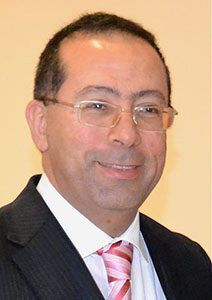
Dr. Radouane Mrabet
Conference: Digital strategy of the Moroccan higher education post-covid era
University Sidi Mohamed Ben Abdellah of Fez, Morocco.
Pr. Radouane Mrabet was appointed President of the University Sidi Mohamed Ben Abdellah of Fez on June 21, 2018 by the council of the government of His Majesty King Mohammed VI.
Pr. Radouane Mrabet is also President of the Internet Society Morocco Chapter since December 9, 2017. He is also the Vice President of the Foundation “Esprit de Fès” since the beginning of the year 2020.
Pr. Radouane Mrabet received the title of Emeritus Professor from Mohammed V University in Rabat on December 21, 2017.
Pr. Radouane Mrabet is the former President of the University Mohammed V - Souissi (December 2010 – August 2014). He served also as Director of ENSIAS, an engineering school specialized in computer sciences, between November 2007 and December 2010.
Pr. Radouane Mrabet has been appointed in January 2019 to the Board of Directors of the Naif Arab University of Security Sciences and to the Board of Directors of the Center for Ethics in Higher Education and Scientific Research belonging to the union of the universities of the Islamic world.
Pr. Radouane Mrabet is a member of the CNACES (National Higher Education Coordination Council) and its pedagogical commission since july 2018. He is also the national coordinator of the network of Moroccan Education Schools and Faculties.
Pr. Radouane Mrabet has been the Chair of the UNESCO Chair for “Lifelong Learning” since June 2019.
Pr. Radouane Mrabet is the author of dozens of national and international publications. He led several R & D projects and studies in the fields of information technology (NET'U MED, JOINMED, BEITI6, TELESUN, ...). The organization of several important scientific events is also to his credit.
Pr. Radouane Mrabet is the founding member and the general coordinator of the “Task Force IPv6 Morocco” since June 2006. He was Chairman of the commission for granting the merit scholarship offered by the Mohammed VI Foundation for the promotion of social works in education, Co-president of the Franco-Moroccan Volubilis research program and of the Franco-Maghrebian research program, Coordinator of the network of faculties of medicine, pharmacy and dental medicine, member of the National Coordination Council of Moroccan Higher education, etc.
Prof. Radouane Mrabet is the author of several dozen national and international publications. He has led R&D projects and studies in the fields of information technology (NET'U MED, JOINMED, BEITI6, TELESUN, ...). The organization of several important scientific events is also to his credit.
Pr. Radouane Mrabet was awarded the Merit Award from Her Highness Princess Lalla Salma in recognition of the services he provided as director of ENSIAS on December 5, 2012
He also received the Merit Award from the Media Observers Foundation in recognition of the services he rendered as president of Mohammed V University - Souissi on December 28, 2014.
Pr. Radouane Mrabet received his PhD in June 1995 from Université Libre de Bruxelles, Brussels, Belgium in the field of Communication Networks. He received a Master degree in July 1987 from Pierre & Marie Curie University, Paris – France, in the field of Computer Systems. Finally, he is an Engineer from École Mohammadia d'Ingénieurs, Mohammed V University, Rabat – Morocco, also in the field of Computer Systems.
Pr. Radouane Mrabet was born on July 31, 1963 in Oujda - Morocco, married and father of three children (Amine, Omar and Radia).

Dr. Francisco José García Peñalvo
Conference: COVID-19 at the University, who said fear of educational technologies?
University of Salamanca, Spain. Full Professor in the Department of Computer Science and Automation at the University of Salamanca (USAL), with three six-year periods of research, one six-year period of transferring and innovation, and four five-year periods of recognized teaching. He received the Beatriz Galindo award for teaching excellence in 2019. He was also a Distinguished Professor at the School of Humanities and Education at the Tecnológico de Monterrey, Mexico and a Researcher of International Impact at the Universidad Nacional San Agustín, Arequipa, Peru. Since 2006 he is the head of the Research Group Recognized by the USAL GRIAL (research GRoup on InterAction and eLearning), a group that is a Consolidated Research Unit of the Junta de Castilla y León Government (UIC 81). He has been Vice-Dean of Innovation and New Technologies of the Faculty of Sciences of the USAL between 2004 and 2007 and Vice-Rector of Technological Innovation of this University between 2007 and 2009. He is currently the Rector's Delegate for Virtual Teaching and the Coordinator of the Doctorate Programme in Education in the Knowledge Society at USAL. He is Editor-in-Chief of the journals Education in the Knowledge Society and Journal of the Information Technology Research, and Associate Editor of many journals, with a special mention to the journal Computers in Human Behavior Reports. He has published more than 100 research papers in JCR-indexed journal (51 Q1). For more detailed information on the publications, these are the public links to the profiles in Google Scholar (http://goo.gl/sDwrr0), Publons (https://bit.ly/2u2FN5l) and ORCID (http://orcid.org/0000-0001-9987-5584).
METHOD OF PARTICIPATION
The articles will be published as a book chapter in the book titled "Transformación Digital en la Educación: Innovaciones y Desafíos desde los Campus Virtuales" by the editorial UA Journals, with ISBN. These articles can be written in Spanish or English.
Subsequently, a selection of the articles presented at the conference will be invited to send an extended version of their articles for possible incorporation as a book chapter in a book published by the editorial Springer. This extended version must be written in English, must discuss the past, present and future of the main research topic of the article presented at the conference, and its authors must guarantee that 50% of their work is innovative content with respect to any previous publication of them – including the one presented at the conference. In this way, the works will be considered “derivatives”. The articles selected to send an extended version will be communicated to the authors once the conference ends via email.
Paper Format
All papers should have between 4-6 pages including images and references. The papers must be written in Spanish or English following the template provided by Springer. The template is blank but, inside, you will find the different styles for titles, paragraphs, etc. The template is available here.
Some clarifications:
- The maximum number of authors per article is 6
- Do not change margins or page size
- Do not include subtitles, only titles. If you want to include a subtitle use colon
- The abstract must not exceed a maximum of 200 words
- Reference Format is Springer Basic Style (cite with a number, no with author and year). If you use Endnote, you can use Lecture Notes in Computer Science style. Same style for Zotero
First Submission
Paper proposals must be submitted using PDF in the EasyChair conference management platform.
Final Submission
If the article is accepted, the final version of your article must be submitted in a .zip file with:
- MS Word file with all fonts included
- Figures included in the Word file must also be provided separately in png format
- PDF version of the final document
- UA Journals copyright agreement signed by all authors of the article. You can download this document here
When you are sure that your article meets the formatting requirements, go to the EasyChair platform and update your accepted submission. Also, check the information in EasyChair and make sure the title, abstract, keywords, author names, affiliations, and order are correct. We will use that data to prepare the final version of each of the chapters.
Plagiarism
UA Journals checks for plagiarism before publishing conference papers to ensure originality. The system detects instances of overlapping text and the like. Avoid plagiarism and self-plagiarism when preparing the final version.
The JICV conferences are not responsible for publication problems with UA Journals related to plagiarism. Authors are responsible for avoiding plagiarism in their manuscripts.
Presentation of articles at the conference
All accepted articles must send a video of maximum 5 minutes following the following TECHNICAL ASPECTS:
- .avi format: horizontal with 16:9 format.
- Resolution: Minimum recommended 1280 x 720.
- Duration: Maximum 5 minutes explaining the main ideas of the work.
- Language: Spanish or English.
- PowerPoint template. Available here.
- You can use tools like Power Point, Active Presenter or Prezi Video to record your presentation. You can also use Google Meet or simply record your computer screen.
- Upload the video to the platform you prefer (Dropbox, OneDrive, WeTransfer, Google Drive...) and copy the download link. You must ensure that the organization has access to download the video.
- Send the video download link to This email address is being protected from spambots. You need JavaScript enabled to view it. with the subject “Video Presentation X”, where X is the paper ID provided by EasyChair.
This video will be uploaded to the conference's YouTube channel.
And, furthermore, on conference days, at least one author per article must participate in the corresponding session (online or in person). Each session will develop as follows:
- Language: Spanish or English.
- Welcome from the chairs of the session.
- Each author will present (online or in person). Each one will have 2 minutes to introduce themselves and summarize their article, WITHOUT slides.
- Discussion led by the session chairs.
Authors participating online will receive instructions on how to connect via Google Meet, and all sessions will be openly streamed via the conference's YouTube channel.
Links to each of the sessions and broadcasts will be available in the conference program before the conference.